
The information in this article is up to date for tax year 2024 (returns filed in 2025).
Understanding tax brackets is crucial for planning your finances. They determine the federal income tax rates you’ll pay on different portions of your taxable income. For the 2024 and 2025 tax years, the tax rates range from 10% to 37%. The income limits for the 2024 tax brackets have been adjusted for inflation to help reduce bracket creep, a phenomenon where inflation pushes your wages into a higher tax bracket, resulting in higher taxes, even if your real income remains the same.
Your tax rate depends on your filing status and taxable income. The five filing statuses are: single, head of household, married filing jointly, married filing separately, and qualifying widow(er). Generally, as your income increases, you’ll move into a higher tax bracket and pay more in taxes. Let’s break down the 2024 and 2025 tax brackets for each filing status.
2024 tax brackets and federal income tax rates
For taxes due in 2025, these are the 2024 tax brackets and federal income tax rates based on your filing status:
| Tax rate | Single | Head of household | Married filing jointly or Qualifying widow(er) | Married filing separately |
| 10% | $0 to $11,600 | $0 to $16,550 | $0 to $23,200 | $0 to $11,600 |
| 12% | $11,601 to $47,150 | $16,551 to $63,100 | $23,201 to $94,300 | $11,601 to $47,150 |
| 22% | $47,151 to $100,525 | $63,101 to $100,500 | $94,301 to $201,050 | $47,151 to $100,525 |
| 24% | $100,526 to $191,950 | $100,501 to $191,950 | $201,051 to $383,900 | $100,526 to $191,950 |
| 32% | $191,951 to $243,725 | $191,951 to $243,700 | $383,901 to $487,450 | $191,951 to $243,725 |
| 35% | $243,726 to $609,350 | $243,701 to $609,350 | $487,451 to $731,200 | $243,726 to $365,600 |
| 37% | $609,351 or more | $609,350 or more | $731,201 or more | $365,601 or more |
2025 tax brackets and federal income tax rates
For taxes due in 2026, these are the 2025 tax brackets and federal income tax rates based on your filing status:
| Tax rate | Single | Head of household | Married filing jointly or Qualifying widow(er) | Married filing separately |
| 10% | $11,925 or less | $17,000 or less | $23,850 or less | $11,925 or less |
| 12% | $11,926 to $48,475 | $17,001 to $64,850 | $23,851 to $96,950 | $11,926 to $48,475 |
| 22% | $48,476 to $103,350 | $64,851 to $103,350 | $96,951 to $206,700 | $48,476 to $103,350 |
| 24% | $103,351 to $197,300 | $103,351 to $197,300 | $206,701 to $394,600 | $103,351 to $197,300 |
| 32% | $197,301 to $250,525 | $197,301 to $250,500 | $394,601 to $501,050 | $197,301 to $250,525 |
| 35% | $250,526 to $626,350 | $250,501 to $626,350 | $501,051 to $751,600 | $250,526 to $375,800 |
| 37% | $626,351 or more | $626,350 or more | $751,601 or more | $375,801 or more |
How do tax brackets work?
Many people wonder, “how do tax brackets work?”. Simply put, tax brackets are designed to ensure that as your income increases, you pay a higher tax rate on each additional dollar you earn, but not on your entire income. This is the essence of the progressive tax system.
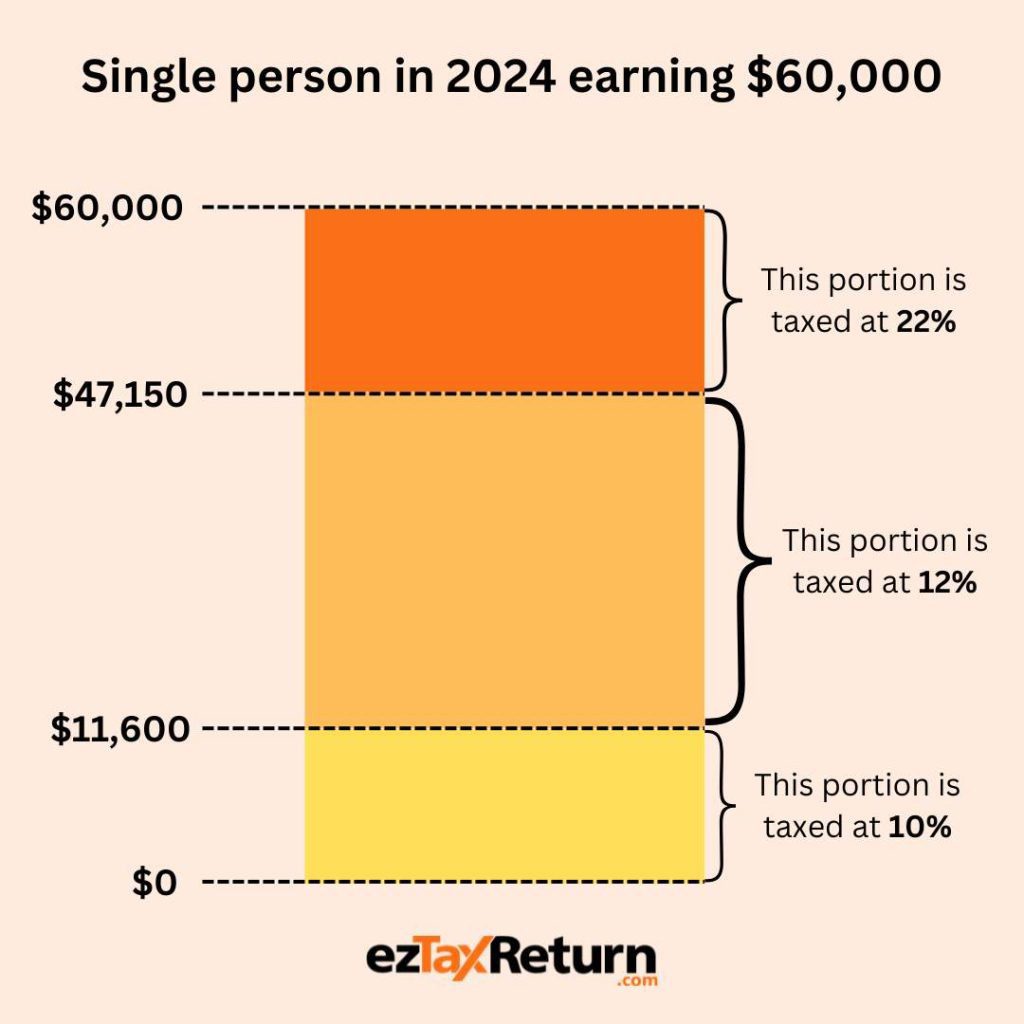
For example, let’s say you’re single and have a taxable income of $60,000 in 2024. You don’t pay 22% on your entire income. Instead, your tax rate is applied to income in “chunks,” based on your tax bracket. Here’s how it breaks down:
- 10% on the first $11,600 of your earnings
- 12% on the chunk of earning from $11,601 and $47,150
- 22% on the remaining income
This is how tax brackets work to ensure you’re only taxed at higher rates on the portions of income that fall within those higher brackets.
What is the federal income tax rate?
When asking “what is the federal income tax rate?”, it’s important to clarify that your federal income tax rate is not a single percentage applied to all your income. It’s the rate applied to each portion of your income, depending on your tax bracket.
Single
| Tax rate | Taxable income | Taxes owed in April 2025 |
| 10% | $0 to $11,600 | 10% of taxable income |
| 12% | $11,601 to $47,150 | $1,160 plus 12% of the amount over $11,600 |
| 22% | $47,151 to $100,525 | $5,426 plus 22% of the amount over $47,150 |
| 24% | $100,526 to $191,950 | $17,168.50 plus 24% of the amount over $100,525 |
| 32% | $191,951 to $243,725 | $39,110.50 plus 32% of the amount over $191,950 |
| 35% | $243,726 to $609,350 | $55,678.50 plus 35% of the amount over $243,725 |
| 37% | $609,351 or more | $183,647.25 plus 37% of the amount over $609,350 |
Head of household
| Tax rate | Taxable income | Taxes owed in April 2025 |
| 10% | $0 to $16,550 | 10% of taxable income |
| 12% | $16,551 to $63,100 | $1,655 plus 12% of the amount over $16,500 |
| 22% | $63,101 to $100,500 | $7,241 plus 22% of the amount over $63,100 |
| 24% | $100,501 to $191,950 | $15,469 plus 24% of the amount over $100,500 |
| 32% | $191,951 to $243,700 | $37,417 plus 32% of the amount over $191,950 |
| 35% | $243,701 to $609,350 | $53,977 plus 35% of the amount over $243,700 |
| 37% | $609,350 or more | $181,954.50 plus 37% of the amount over $609,350 |
Married filing jointly or Qualifying widow(er)
| Tax rate | Taxable income | Taxes owed in April 2025 |
| 10% | $0 to $23,200 | 10% of taxable income |
| 12% | $23,201 to $94,300 | $2,320 plus 12% of the amount over $23,200 |
| 22% | $94,301 to $201,050 | $10,852 plus 22% of the amount over $94,300 |
| 24% | $201,051 to $383,900 | $34,337 plus 24% of the amount over $201,050 |
| 32% | $383,901 to $487,450 | $78,221 plus 32% of the amount over $383,900 |
| 35% | $487,451 to $731,200 | $111,357 plus 35% of the amount over $487,450 |
| 37% | $731,201 or more | $196,669.50 + 37% of the amount over $731,200 |
Married filing separately
| Tax rate | Taxable income | Taxes owed in April 2025 |
| 10% | $0 to $11,600 | 10% of taxable income |
| 12% | $11,601 to $47,150 | $1,160 plus 12% of the amount over $11,600 |
| 22% | $47,151 to $100,525 | $5,426 plus 22% of the amount over $47,150 |
| 24% | $100,526 to $191,950 | $17,168.50 plus 24% of the amount over $100,525 |
| 32% | $191,951 to $243,725 | $39,110.50 plus 32% of the amount over $191,950 |
| 35% | $243,726 to $365,600 | $55,678.50 plus 35% of the amount over $243,725 |
| 37% | $365,601 or more | $98,334.75 plus 37% of the amount over $365,600 |
As you can see from the charts above, the federal income tax rate varies depending on how much money you earn. The more you make, the higher your tax rate on the income that falls into higher brackets.
What is taxable income?
Taxable income includes wages, salaries, tips, bonuses, and commissions, but the list doesn’t end there. Learn more about what’s considered taxable income.
What is a marginal tax rate?
Your marginal tax rate is the tax rate you pay on your last dollar of income. The marginal tax rate increases as your income grows. The easiest way to figure out your marginal tax rate is to look at the highest tax bracket you’ll be taxed in.
What is an effective tax rate?
Your effective tax rate is the percentage of your taxable income being paid in taxes. You can calculate your effective tax rate by dividing your tax owed by your total income. This rate is usually lower than your marginal tax rate.
How to get into a lower tax bracket
One of the best ways to lower your tax rate is to reduce your taxable income. Here’s how to reduce taxable income:
- Contribute to retirement accounts like a 401(k) or a traditional IRA. These contributions reduce your taxable income because they’re made on a pre-tax basis.
- Maximize tax deductions by contributing to an health savings account (HSA) or utilizing deductions for things like medical expenses, student loan interest or charitable contributions.
- If you qualify, use tax credits such as the Child Tax Credit or Earned Income Tax Credit (EITC), which directly reduce the amount of taxes you owe, rather than just lowering taxable income.
By taking advantage of these options, you can lower your taxable income, potentially reducing your tax bracket and paying less in taxes.
File your taxes fast, easy, and online today.
The articles and content published on this blog are provided for informational purposes only. The information presented is not intended to be, and should not be taken as, legal, financial, or professional advice. Readers are advised to seek appropriate professional guidance and conduct their own due diligence before making any decisions based on the information provided.